
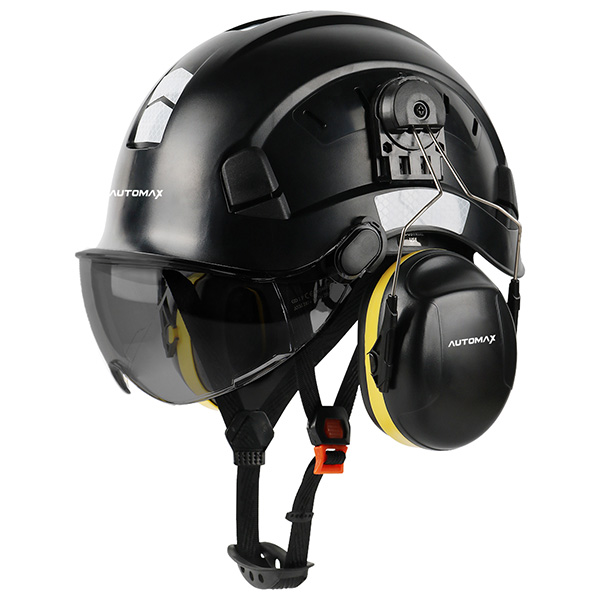
Safety helmet expiry dates are molded directly into the shell material, often as a manufacture date plus a service life. Safety helmet expiry date and hearing protection PPE are manufactured by us as custom head protection PPE. Our OEM/ODM service helps you build a reliable private-label product range. Past that date, the helmet may not perform as needed and is unsafe for use.

Solicite um orçamento personalizado para capacetes de segurança industrial à AutoMax
Why do safety helmets have an expiry date?
Safety helmets carry an expiry date because the materials degrade over time, even without visible damage. A hard hat past its safety helmet expiry date no longer delivers the protection it once did. Think of it like a use-by date on food. The helmet might look fine on the outside, but its ability to absorb impact has quietly diminished. That hidden weakness puts workers at risk.
What happens to the shell material as a helmet ages?
Sunlight, temperature swings, and everyday wear break down the thermoplastic shell. The material becomes brittle. A brittle shell cracks or shatters on impact instead of flexing to absorb the blow. The suspension system inside the helmet follows a similar path. Straps lose elasticity and the headband can warp, compromising the fit and the critical standoff distance between the head and the shell.
How does the manufacture date stamp determine the replacement schedule?
The manufacture date stamp marks the start of the helmet’s service life, not the purchase date. A helmet sitting in a storeroom before its first use has already lost part of its protective lifespan. Most manufacturers set a maximum service life of 3 to 5 years from that stamped date, assuming normal use and no impacts. A safety manager’s inspection routine must treat that stamp as the non-negotiable starting point for replacement planning.
A disciplined Safety helmet inspection guide catches problems before the expiry date arrives. We manufacture custom head protection with this reality in mind, manufacturing helmets that make date stamps clear and inspection straightforward. The company’s OEM approach ensures every batch delivers consistent quality, so safety managers can trust the timeline printed on the shell. Ignoring the expiry date means gambling with head protection that has quietly passed its best.
Where can you find the manufacture date stamp?
The manufacture date stamp sits inside the hard hat, not on the outside. Safety managers and site supervisors rarely spot an expiry date printed on the shell’s exterior. Instead, the stamp is molded directly into the hat’s material during production.
Every hard hat carries an expiry date, also known as a maximum lifespan. This date is not marked like a sell-by date on food packaging. The manufacturer embeds the information where it stays protected from weather and abrasion.
Solicite um orçamento personalizado para capacetes de segurança industrial à AutoMax
How do you locate the stamp on a hard hat?
Follow these steps to find the safety helmet expiry date information:
Remove the hard hat and turn it upside down.
Inspect the underside of the brim first. The stamp often appears there as raised lettering or a molded clock symbol.
Check near the suspension attachment points. Many manufacturers place the date stamp close to where the headband connects to the shell.
Look for a circular dial with numbers. This dial typically shows the month and year of manufacture.
What does the stamp look like?
The stamp usually appears as a small circular clock face with an arrow pointing to a number. The arrow points to the month (or quarter) around the perimeter, while the two-digit year is embossed in the center of the circle. Some manufacturers use a simple date code instead, but the molded clock remains the most common format.
AutoMax focuses on practical design and consistent quality in custom head protection products. That attention to detail extends to clear, durable date markings that inspection teams can read quickly. A proper Safety helmet inspection guide starts with locating this stamp before any other checks.
How do you decode the date wheel on your helmet?
The safety helmet expiry date starts with a molded circle stamped inside the shell. An arrow on that circle points to the year and quarter of manufacture. This manufacture date stamp is the baseline for every replacement calculation.
Decoding the wheel follows a simple sequence. Each step narrows the timeline from broad year to specific quarter.
Where exactly is the date wheel located?
Flip the helmet over and look inside the crown. The wheel sits near the suspension attachment points or along the rear brim. It is molded into the plastic, not printed, so it survives daily wear.
Find the molded circle. Run a finger along the inner shell until the raised ring appears.
Locate the arrow. The arrow points outward from the center of the circle.
Read the year. The two-digit year is embossed in the center of the circle.
Read the quarter. Dots or smaller numbers around the ring mark the quarter, typically 1 through 4.
Record both values. Write the year and quarter on an inspection tag or digital log.
How do you calculate the expiry date from the wheel?
Add the manufacturer’s recommended lifespan to the stamped date. If hard hats have not been damaged and only used in good working conditions, they have a lifespan of 3 to 5 years. A helmet stamped for a given quarter therefore expires between that same quarter three years later and that same quarter five years later.
The Safety helmet inspection guide treats this calculation as the first checkpoint. Site supervisors should verify the wheel before every shift rotation. A missing or unreadable stamp means the helmet cannot be dated, and the safest call is immediate replacement.
Custom logos and private-label branding help procurement teams standardize inspection workflows across a fleet.
What are the signs your helmet needs replacing?
A hard hat shows clear physical warnings long before catastrophic failure occurs. Visible damage, material degradation, and internal wear each signal that replacement is overdue.
Solicite um orçamento personalizado para capacetes de segurança industrial à AutoMax
What visible damage means a helmet is unsafe?
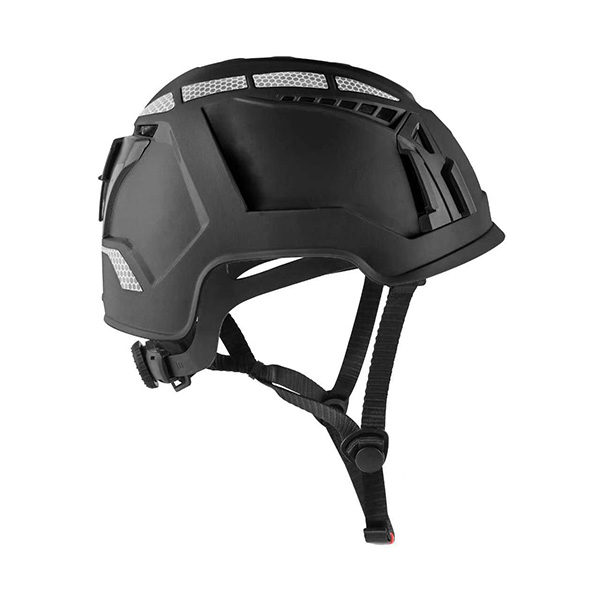
Check the outer shell for dents, cracks, and scratches. These obvious signs of impact or stress mean the helmet’s structural integrity is compromised. A hard hat with visible dents or cracks needs immediate replacement, even if the three-year lifespan has not been reached.
Look closely for minor scores and scuffs. Small imperfections are not just cosmetic. According to Storm Procurement, minor scores or scuffs can be a valid reason to replace the hard hat, as they may weaken the shell over time.
Inspect the inner shell thoroughly. Damage is not always visible from the outside. A proper Safety helmet inspection guide directs inspectors to examine the inner shell for hidden cracks or deformation that compromise protection.
How does material aging show up?
A safety helmet expiry date is only one part of the equation. The material itself degrades with exposure. Look for chalkiness, color fading, or a brittle texture on the shell. These are signs of UV damage breaking down the plastic. The suspension system also wears out. Stretched, frayed, or torn straps prevent the helmet from sitting correctly and absorbing impact. A manufacture date stamp tells inspectors the helmet’s age, but daily wear and environmental exposure often shorten its useful life. Our OEM/ODM service helps you build a reliable private-label product range, making it easier for procurement officers to plan reliable replacement cycles.
How do you set up a regular inspection schedule?
A regular inspection schedule protects workers from head injuries caused by degraded or damaged hard hats. Hard hats provide protection for the brain against falling or flying objects, making routine checks a non-negotiable part of any safety program. Skipping these inspections leaves teams exposed to equipment that fails exactly when impact protection matters most.
OSHA requires all hard hats to comply with the ANSI/ISEA Z89.1-2014 standard for Industrial Head Protection. That standard sets the performance baseline, but it does not spell out an expiration timeline. The useful life of a hard hat shortens when the hat is not cared for properly, much like food spoiling faster outside the refrigerator. A structured schedule closes that gap.
What should a hard hat inspection schedule include?
A practical schedule combines daily visual checks with formal documented reviews. Safety managers and site supervisors benefit from a written cadence that assigns responsibility and records findings.
Daily pre-shift checks. Workers inspect their own hard hats for cracks, dents, scratches, or signs of impact before starting work.
Weekly supervisor spot checks. Supervisors review a sample of hard hats across the crew to catch issues workers might overlook.
Monthly documented inspections. A designated safety lead examines every hard hat on site and logs the condition, including the manufacture date stamp.
Quarterly replacement reviews. The safety team flags any hard hat approaching its service life limit for replacement.
How often should the safety helmet expiry date be reviewed?
Review the safety helmet expiry date during every monthly documented inspection. The manufacture date stamp on the shell tells inspectors how long the helmet has been in service. A Safety helmet inspection guide helps standardize what inspectors look for, from shell deformation to suspension wear. AutoMax collaborates globally to enhance product presentation and cross-selling opportunities, which supports safety brands building inspection-ready product ranges with clear date markings.
Perguntas frequentes
Where is the safety helmet expiry date located?
The expiry date is molded directly into the shell material, often as a manufacture date plus a service life. The stamp sits inside the hard hat, molded into the material, not on the outside.
What does the manufacture date stamp look like?
The arrow points to the month (or quarter) around the perimeter, while the two-digit year is embossed in the center of the circle.
How does the manufacture date determine the replacement schedule?
The manufacture date stamp marks the start of the helmet’s service life, not the purchase date. Conclusion So there you have it, checking the date wheel, watching for visible damage, and sticking to a regular inspection schedule all work together to keep your team protected. The real takeaway? Don’t wait for a helmet to fail before replacing it. Make that date stamp your first checkpoint, and when in doubt, swap it out. Your crew’s safety depends on equipment you can trust, and that starts with knowing exactly when each helmet’s time is up.
 English
 Deutsch
 Français
 Polski
 Português do Brasil
 Español
 日本語
 Русский
 العربية
 Italiano
 Nederlands
 Türkçe
 한국어