
Safety helmets combine a hard outer shell with an internal suspension system. The shell resists penetration from sharp objects, while the suspension distributes impact pressure across the head. Approximately 20 million workers in the United States rely on this two-part design for protection against blunt and sharp impacts.
Poproś firmę AutoMax o indywidualną wycenę przemysłowego kasku ochronnego
What are safety helmet materials?
Safety helmet materials are the substances used to build the hard outer shell and the inner suspension system. Together, these components protect a worker’s head from impacts and penetration. A helmet’s design resembles a protective barrier. It shields against blunt objects, sharp debris, and falls.
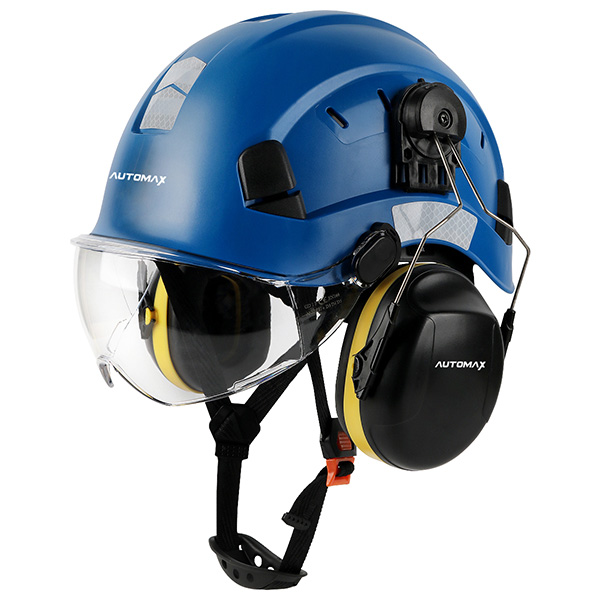
The hard shell provides resistance to penetration by sharp objects. The suspension system lessens the pressure and impact of a localized blow by distributing the force. A properly constructed product delivers these two protection types. Most hard hats use a network of straps that connect to a headband attached to the helmet. This suspension also creates a space of approximately 30 mm (1.2 inches) between the shell and the wearer’s head.
What do the shell and suspension actually do?
The shell acts as the first line of defense. It stops sharp objects from reaching the skull. The suspension sits inside the helmet and spreads impact force across the top of the head. Without this dual system, a single blow concentrates all its energy on one small area.
How do material choices affect protection?
Different shell materials offer different levels of durability and weight. We manufacture custom head protection PPE and hearing protection PPE. Our OEM/ODM service helps you build a reliable private-label product range. Procurement officers evaluate these material options based on the specific hazards present at a job site. A lightweight shell reduces neck fatigue over a long shift. A heavier, high-density material might provide better impact resistance in high-risk zones.
How does the shell material protect your head?
A safety helmet shell is the first line of defense against workplace hazards. The shell resists penetration by sharp objects and absorbs blunt impacts from falling tools or debris. Without a properly engineered shell, a worker’s skull bears the full force of every strike. That direct transmission of energy causes injuries that no suspension system alone can prevent.
The shell’s protective role depends on two mechanisms working together. First, the rigid outer surface deflects or stops objects before they reach the head. Second, the shell transfers remaining force downward into the suspension system. Industrial Safety Gear notes that the hard shell provides resistance to penetration by sharp objects. The suspension bands then spread the helmet’s weight and the force of any impact over the top of the head.
What is the gap between the shell and the head for?
A suspension system creates approximately 30 mm (1.2 inches) of space between the helmet’s shell and the wearer’s head. Wikipedia explains that this gap means an object striking the shell is less likely to transmit impact directly to the skull. That buffer zone gives the shell room to deform slightly without contacting the head. Crushing that space eliminates the helmet’s ability to manage energy.
How does shell design improve impact resistance?
Some helmet shells include a mid-line reinforcement ridge to improve impact resistance. This structural feature stiffens the crown area where falling objects most often strike. The ridge helps distribute force across a larger surface area rather than concentrating it at a single point. Rock climbing helmets use a similar design principle in a different context.
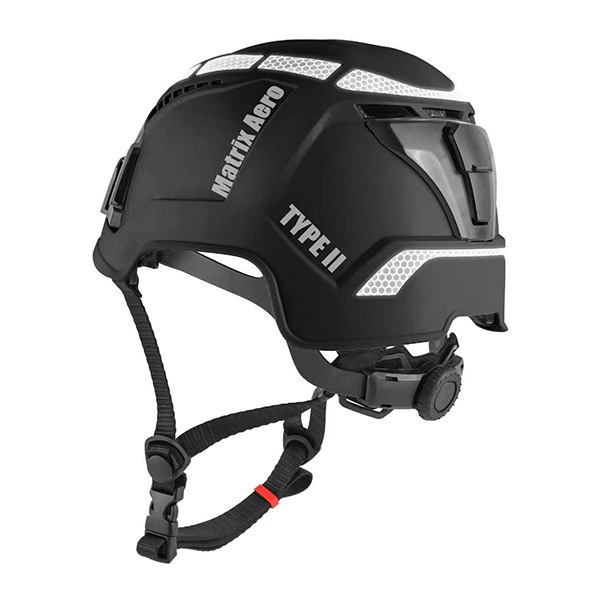
Safety helmet materials also determine which impact directions a shell handles. Type I shells focus on top-of-head impacts. Type II shells add protection against lateral and off-center blows. Procurement officers evaluating material choices must match the shell’s protection type to the specific hazards on their job sites. A shell that only guards against vertical strikes leaves workers exposed to side impacts that are common in confined spaces and active construction zones.
What are the common shell materials compared?
Safety helmet shells come in four primary materials, each delivering distinct performance characteristics. High-density polyethylene (HDPE), acrylonitrile butadiene styrene (ABS), polycarbonate, and fiberglass all meet current ANSI performance standards. The right choice depends on the specific hazards present in a work environment.
Poproś firmę AutoMax o indywidualną wycenę przemysłowego kasku ochronnego
Which material is best for general industrial use?
HDPE stands out as a lightweight and economical option. It performs reliably in many general industrial settings where extreme temperatures or severe impacts are not the primary concern. ### What makes ABS popular for construction?
ABS offers strong impact resistance combined with structural rigidity. These properties make it a frequent choice for construction environments where falling debris and accidental bumps are daily realities. The material holds its shape well under stress.
Polycarbonate shells provide another level of durability. Their high impact resistance suits workplaces where head protection faces repeated, forceful contact. Fiberglass, by contrast, excels in a different area: heat resistance. This material is commonly specified for high-temperature environments such as foundries or welding operations.
Selecting a shell material is only part of the equation. We support customization, sampling, quality control, and export coordination.
How do suspension materials affect comfort and safety?
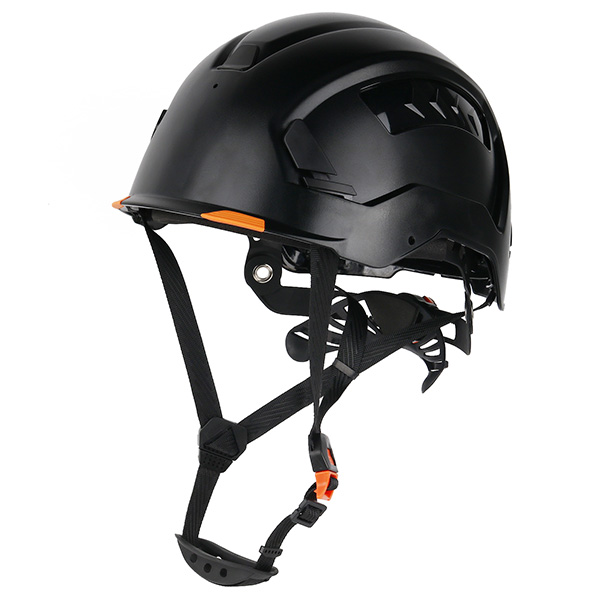
Suspension materials determine how a hard hat distributes impact force and how comfortably it sits during long shifts. Most hard hats use a network of straps that connect to a headband attached to the helmet to create the suspension effect. That design holds the shell away from the head, creating a critical buffer zone.
The suspension system does two jobs at once. First, it spreads the force of a localized blow across the top of the head instead of concentrating it at one point. Second, the gap between shell and head allows the shell to flex and absorb energy before it reaches the skull. A poorly fitted suspension collapses this space, which defeats the entire protective mechanism.
What makes a suspension system comfortable for all-day wear?
Comfort and fit matter because workers wear helmets for long periods. A well-designed suspension keeps the helmet in place throughout work activities without creating pressure points. The headband material and strap tension directly affect whether a worker keeps the helmet on or removes it when discomfort sets in.
AutoMax offers custom suspension systems as part of its OEM/ODM service, letting procurement teams fine-tune fit for their end users. Custom heavy-duty hard hats with tailored suspension configurations address the fit variations across different head shapes and work environments.
How does suspension spacing protect against impact?
The clearance between shell and head is not arbitrary. That space gives the shell room to deform under impact without transferring the full force to the wearer. Suspension straps stretch slightly on impact, absorbing energy before it reaches the headband. Without adequate spacing, even a certified shell fails to deliver rated protection.
What should buyers consider when choosing materials?
Material choice determines both protection level and long-term reliability. Buyers must evaluate how shell composition and suspension design align with specific workplace hazards. Approximately 20 million people in the United States and millions more globally wear hard hats while working, according to Industrial Safety Gear, so material reliability carries broad consequences. A poorly matched material fails when it matters most.
Poproś firmę AutoMax o indywidualną wycenę przemysłowego kasku ochronnego
How do safety certifications influence material selection?
Most construction helmets must meet current safety regulations. Buyers should verify that chosen materials comply with the latest standards for their particular line of work. Outdated certifications leave workers exposed to preventable head injuries.
What role does electrical protection play in material choice?
Electrical hazard ratings directly shape material requirements. AutoMax provides Class C, G, and E configurations, each offering different levels of electrical protection. Class G helmets guard against low-voltage conductors. Class E materials handle high-voltage environments. Class C options provide no electrical protection and suit impact-only applications.
Safety helmet materials range from high-density polyethylene to advanced composites. Each material balances weight, durability, and cost differently. The suspension system matters equally. A quality suspension spreads impact force across the head and maintains roughly 30 mm of clearance between shell and skull.
AutoMax focuses on attention to detail, practical design, and consistent quality. The company collaborates globally to enhance product presentation and cross-selling opportunities. Buyers gain more than a helmet shell. They receive a complete protection system engineered for real workplace demands.
Najczęściej zadawane pytania
What materials are safety helmet shells made from?
Safety helmet shells use different materials offering varying durability and weight. A lightweight shell reduces neck fatigue, while a heavier, high-density material provides better impact resistance.
What does the suspension system inside a helmet do?
The suspension system distributes impact pressure across the head and creates a 30 mm gap between the shell and the wearer’s head.
How does the shell protect against sharp objects?
The hard shell resists penetration by sharp objects and absorbs blunt impacts from falling tools or debris.
Wnioski
So when you’re choosing a safety helmet, you’re really picking a system, shell material and suspension working together. Match the shell to your specific hazards, whether that’s heat, impact, or electrical risk, and make sure the suspension keeps that critical gap intact. That combination turns a hard hat into real protection you can trust on the job.
 English
 Deutsch
 Français
 Polski
 Português do Brasil
 Español
 日本語
 Русский
 العربية
 Italiano
 Nederlands
 Türkçe
 한국어