
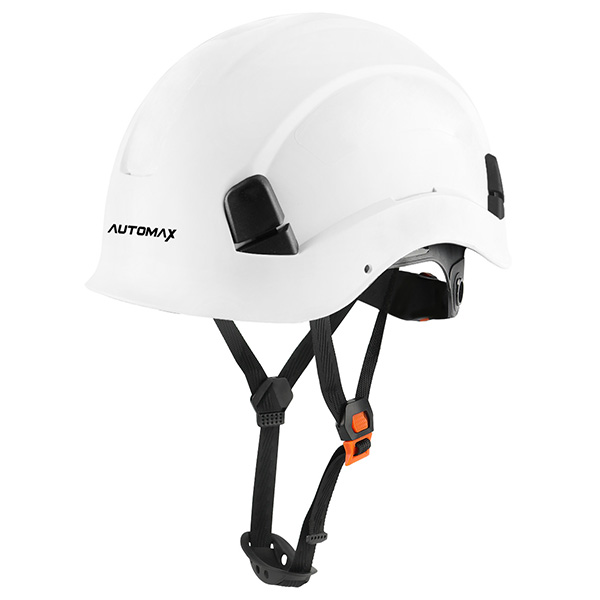
An industrial safety helmet is a hard-shell personal protective equipment (PPE) device that shields the head from falling objects, impacts, and debris. AutoMax manufactures custom head protection PPE for safety brands, importers, and distributors. Industrial safety helmets typically use durable plastic materials to prevent serious injury during workplace accidents.
Fordern Sie bei AutoMax ein individuelles Angebot für Arbeitsschutzhelme an
What is an industrial safety helmet?
An industrial safety helmet is personal protective equipment engineered to shield the head from workplace injuries. Safety managers and procurement specialists rely on these helmets to prevent traumatic brain injuries from falling objects, swinging equipment, and accidental impacts. Without proper head protection, a single jobsite incident can cause permanent disability or death.
These helmets are typically constructed from hard materials like plastic, fiberglass, or high-density thermoplastics. The rigid shell absorbs and distributes impact forces across a wider surface area. Some models include attached visors for additional face protection, while others feature accessory slots for earmuffs or face shields.
How does an industrial safety helmet differ from a standard hard hat?
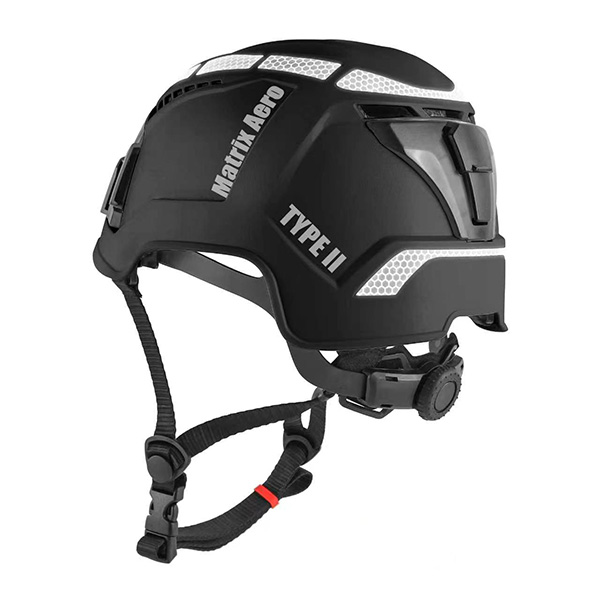
Coverage sets them apart. Industrial safety helmets are available in both Type I (top-only) and Type II (top, sides, and back) configurations, while traditional hard hats typically offer only basic top-of-head defense. This comprehensive design in Type II models shields workers from multiple angles of impact. Advanced models may also integrate chin straps to keep the helmet secure during sudden movements or slips.
What materials go into a quality industrial safety helmet?
The choice of material depends on the hazards present on a specific worksite. Thermoplastics offer lightweight durability for general construction. Fiberglass provides higher heat resistance for foundry and welding applications. The material directly affects both protection level and all-day wearability.
AutoMax manufactures custom head protection PPE, including industrial safety helmets, for safety brands and distributors. The company’s Maßgefertigter Kopfschutz (PSA) development covers material selection, private-label branding, and export coordination. Procurement teams building a reliable product range benefit from this focused above-the-neck expertise.
How does a safety helmet differ from a hard hat?
A safety helmet provides advanced impact protection engineered for modern workplace hazards. A traditional hard hat offers basic top-of-head defense that falls short against today’s complex job site risks.
The distinction matters because outdated head protection leaves workers vulnerable. A cheap, traditional hard hat represents a gamble when debris flies or equipment shifts unexpectedly. Modern safety helmets address the new wave of risks that older designs never anticipated.
Industrial safety helmet construction starts with robust materials selected for high-impact scenarios. Manufacturers craft these helmets from fiberglass, thermoplastics, or high-density polyethylene. The material choice directly influences how well the helmet performs when struck.
The engineering behind safety helmets focuses on force management. Each helmet’s construction absorbs and distributes impact forces across its shell. This design minimizes head injury risk during accidents or collisions, according to Oteplace’s analysis of protective equipment differences.
Fordern Sie bei AutoMax ein individuelles Angebot für Arbeitsschutzhelme an
What materials make safety helmets more protective than hard hats?
Safety helmets use fiberglass, thermoplastics, and high-density polyethylene. These sturdy materials outperform the basic plastics found in many traditional hard hats. The difference shows up most clearly under high-impact conditions where material integrity determines injury outcomes.
What protection levels do industrial safety helmets offer?
AutoMax manufactures industrial safety helmets with Type I and Type II protection options. Type I guards against top-of-head impacts. Type II adds lateral protection for off-center and side strikes that traditional hard hats leave exposed.
What safety standards do industrial helmets meet?
An industrial safety helmet must comply with rigorous standards that govern impact protection, electrical insulation, and coverage type. The two dominant frameworks are ANSI/ISEA Z89.1 in the United States and CSA Z94.1 in Canada. MSA Safety notes that selecting the right hard hat or safety helmet requires evaluating both ANSI and CSA standards alongside Type I versus Type II requirements. Without this evaluation, procurement teams risk specifying head protection that fails under lateral impact or high-voltage exposure.
How do Type I and Type II classifications differ?
Type I helmets protect against impacts to the top of the head only. Falling tools and dropped fasteners are the primary hazards these helmets address. Type II helmets add lateral protection. They shield against side impacts, which matter on busy sites with swinging loads, low clearances, or moving equipment. A hazard assessment determines which type a worksite demands.
What do Class C, G, and E mean for electrical protection?
The class rating defines a helmet’s electrical insulation properties. The table below breaks down each class.
A thorough hazard assessment pinpoints the appropriate class for specific work conditions. AutoMax manufactures industrial safety helmets in Class C, G, and E configurations. For environments requiring non-vented shells and ANSI/ISEA Z89.1 compliance for Class G or Class E, the company’s custom electrical hard hats provide targeted solutions. Procurement teams match the class rating to the electrical risks present on each jobsite. Getting this wrong leaves workers exposed to shock hazards that standard helmets never address.
What are the key parts of a safety helmet?
An industrial safety helmet consists of several engineered components working together to protect the wearer. The outer shell, suspension system, and optional accessories each serve a distinct protective function.
The shell forms the helmet’s rigid exterior. It absorbs and distributes impact forces across its surface, preventing concentrated blows from reaching the skull. Materials like high-density polyethylene or thermoplastics give the shell its strength while keeping the helmet lightweight enough for all-day wear.
Beneath the shell sits the suspension system. This internal harness cradles the head and maintains a critical air gap between the shell and the wearer’s scalp. That space acts as a crumple zone during impact. Without it, force transfers directly to the head. AutoMax offers custom suspension systems as part of its OEM/ODM service, allowing safety brands to tailor fit and comfort for their specific markets.
Fordern Sie bei AutoMax ein individuelles Angebot für Arbeitsschutzhelme an
What accessories can attach to a safety helmet?
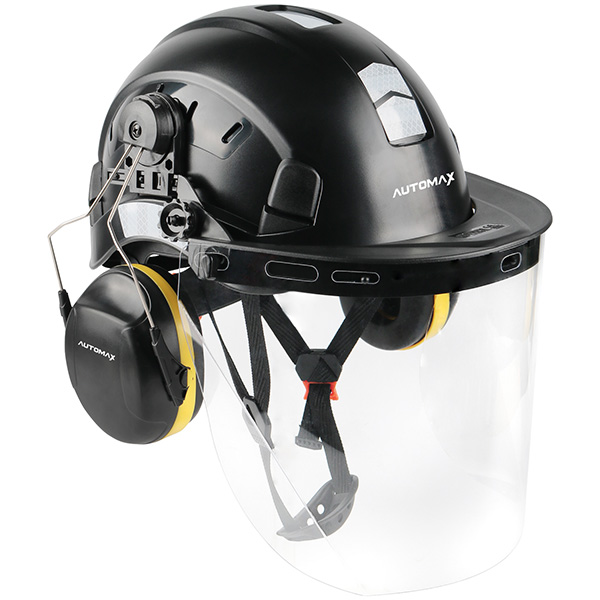
Modern helmets include accessory slots for mounting additional equipment. Visors, face shields, and hearing protection attach directly to these slots, expanding the helmet’s protective coverage without requiring separate gear. Some industrial safety helmets come with visors pre-attached, while other models ship without them. The choice depends on the specific hazards present at a worksite.
How does customization affect helmet components?
Private-label programs let brands modify several helmet elements. Custom colors and logos appear on the shell exterior, reinforcing company identity on busy job sites. Suspension systems can be adjusted for different head shapes and regional fit preferences. AutoMax provides options for helmet-mounted accessories as well, giving distributors flexibility when building product ranges tailored to local safety regulations and customer expectations.
How can you customize a safety helmet for your brand?
Customizing an industrial safety helmet transforms standard protective equipment into a branded asset. The process begins with selecting base helmet models and applying brand-specific modifications that meet both safety standards and market positioning goals.
What customization options are available for industrial safety helmets?
Brands can modify several elements of an industrial safety helmet. Color selection creates immediate visual recognition on job sites. Logo application, whether through pad printing, embossing, or durable decals, places the brand mark directly on the shell. Packaging design tailored for local sales channels completes the branded experience before the helmet ever reaches the end user.
How does private labeling work for head protection products?
Private labeling allows companies to sell helmets under their own brand name without manufacturing the products themselves. AutoMax manufactures the helmets to specification while applying the client’s branding, labels, and packaging. The result is a product line that appears fully proprietary to the end customer. Private-label packaging and labeling options extend the brand identity from the product itself to the box it arrives in.
The customization workflow typically follows a structured path:
Initial consultation to define brand requirements and helmet specifications
Sampling phase where physical prototypes receive the proposed branding treatments
Quality control verification to confirm that customization processes do not compromise protective performance
Export coordination for international shipments, ensuring branded products arrive market-ready
AutoMax’s OEM/ODM service supports this entire sequence. The company handles new product launches and repeat orders with equal attention to consistency. Every batch maintains the same color fidelity, logo placement, and packaging quality that the brand’s customers expect.
Häufig gestellte Fragen
What is an industrial safety helmet?
An industrial safety helmet is a hard-shell PPE device that shields the head from falling objects, impacts, and debris, using durable plastic materials to prevent serious injury.
How does an industrial safety helmet differ from a standard hard hat?
Industrial safety helmets protect the top, sides, and often the back of the head, while traditional hard hats offer only basic top-of-head defense.
What materials are used in a quality industrial safety helmet?
Manufacturers use thermoplastics for lightweight durability, fiberglass for higher heat resistance, or high-density polyethylene, depending on worksite hazards.
Fazit
So when you’re choosing an industrial safety helmet, you’re really deciding how much protection your team needs, top-only or side-to-side, basic insulation or high-voltage rated. Match those specs to your actual worksite hazards, and you’ve got a helmet that does its job. From there, customization turns that safety gear into something your crew recognizes and trusts. That’s the whole picture.
 English
 Deutsch
 Français
 Polski
 Português do Brasil
 Español
 日本語
 Русский
 العربية
 Italiano
 Nederlands
 Türkçe
 한국어